
Scaling sustainability in business with former ISA head and Honeywell exec Prabhu Soundarrajan


IN BRIEF
- “Environmental risk is a key part of that overall envelope of business risk.”
- “We’ve had the opportunity to learn from different technology trends, but the rubber meets the road when you apply a technology to solve a business problem.”
- “If you’re taking a new initiative—be it technology, be it environmental, different types of sustainability—integrate into your business operations from day one.”
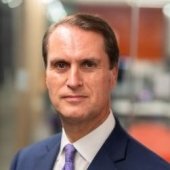
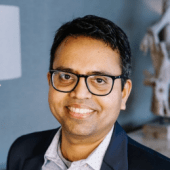
In this VISION by Protiviti Interview, Christopher Patterson, an Associate Director with Protiviti, sits down with Prabhu Soundarrajan, former president and chairman of the Board of the International Society of Automation and Honeywell executive, to discuss scaling sustainability in business, including risk, cybersecurity and the impact of AI. Currently, Soundarrajan is an operating partner, board member and head of corporate development at Service by Medallion, an integrated facility company.
In this interview:
2:51 – Driving profitability, assessing risk
10:04 – Automation and AI in sustainability and resilience
16:20 – How to focus on the right things
19:49 – Three big takeaways
Scaling sustainability on business with former ISA head and Honeywell exec Prabhu SoundarrajanScaling sustainability on business with former ISA head and Honeywell exec Prabhu Soundarrajan
Joe Kornik: Welcome to the VISION by Protiviti interview. I’m Joe Kornik, Editor-in-Chief of VISION by Protiviti, a global content resource examining big themes that will impact the C-suite and executive boardrooms worldwide. Today, we welcome Prabhu Soundarrajan, President of the International Society of Automation and Head of Corporate Development and Strategy at Service by Medallion. Prabhu will be sitting down with my Protiviti colleague, Chris Patterson, an associate director in the business performance improvement practice. The two of them got together in our San Ramon office earlier this month. Chris, I’ll turn it over to you to begin.
Chris Patterson: Thanks, Joe. Prabhu, welcome. Thanks for being here.
Prabhu Soundarrajan: Glad to be here. Thanks for having me.
Patterson: Absolutely. Absolutely. It has been a long time coming, and for the sake of this conversation, did you drive here in an EV or a regular car?
Soundarrajan: I did drive here in my EV.
Patterson: Okay. Perfect.
Soundarrajan: I’ve owned one for the last eight years.
Patterson: Okay.
Soundarrajan: Try to do my part in the environment.
Patterson: That’s amazing. I have spent a lot of time working on environmental initiatives myself, and I did drive here in a 2009 Honda Civic. I believe that there’s life cycle emissions that I’m avoiding, but transition to EV at some point. It’s awesome.
Soundarrajan: That’s great.
Patterson: Yes. Well, again, thanks for being here. You have an extensive amount of experience in this space. Gosh, you are a board member, an investor. You’re a corporate strategist. You lead different initiatives globally. The list really goes on. Could you talk a little bit about that experience and what brought you here today?
Soundarrajan: Absolutely. First of all, I’ll start by saying, I think we all want to leave this world a better place to live for our children, on our next generation. Start with that purpose of doing good for the world in general, so we can have a long-lasting life for multiple generations. I think everybody wants that, but also, we want to do well, right? The whole idea of doing good and doing well at the same time is very possible by really focusing on a strategic framework around linking business sustainability and environmental sustainability, and driving key strategies that can advance not only business profitability, but also environmental stewardship. In my background, I spent a lot of time in big Fortune 100 companies driving different initiatives, as you mentioned, both in the strategic, environmental health and safety, waste management. Now, I have a corporate lens in driving those initiatives in maybe middle-market companies as an investor and also as an operator. Bringing those, I’d like to share practical examples of how we can drive business profitability whilst driving environmental sustainability.
Patterson: Absolutely. The key thing that you mentioned there for me is business profitability. Whether you’re a public corporation with many shareholders, or whether you’re a private organization, driving the financials forward is something of big interest, and the sole interest for some folks, and a large interest for others. Could we talk a little bit about risk, though? Prabhu, you’ve seen this play out in the boardroom, right? You’ve seen risk and how it is assessed at a board level. Can you just talk a little bit about how the board is really thinking about risk?
Soundarrajan: Enterprise risk is what I would start with. As board directors, right, we have to help our teams understand the inherent risks in any business. For example, given my experience in public companies and now sitting in private boards, and also in industry boards, right, there’s an envelope of risk every company operates with. It’s called an enterprise or business risk. As board directors, we consistently drive mitigating and minimizing that risk by providing tools and strategies to management teams and then the broader employee base. Environmental risk is a key part of that overall envelope of business risk. You could say if you’re in manufacturing, or if you’re in financial services, you have two different types of key risks. Manufacturing, you’re thinking about environmental health and safety, your facility risk, and your human capital risk, because without that, you can’t operate the business. You have a risk, I would say, from AI and what is AI doing towards your human capital and also your overall operations. That’s a risk. If you’re looking at an enterprise software company, you’re operating in different bounds around cybersecurity risks, right? Board directors have to be consistently guiding and channeling these management CEOs towards mitigating that risk.
When you put the right mitigation strategy and sustainable mitigation strategy, you can drive a lot of business value and differentiate from your peers. Some of the companies have really done it well. They’ve planned it well ahead of time. I’ll give you an example. When I was in Honeywell, we had a lot of plants, right? In plants, we have to go into those plants in our automation business, so about a billion-dollar business. In Honeywell, they have to go into those plants and actually turn knobs and fix things. They have to be physically present on site. March 2020, I just came up with an example of remote monitoring. We put a whole technology envelope. I got the inspiration from a blog article that Satya Nadella wrote, who’s CEO of Microsoft, around remote work. We just said, “We have to be the first in the industry to adopt that remote work because it’s happening in the consumer industry.” We applied it to industrial plants. That was in February 2020. You know what happened in March 2020. That became the norm because then people could fully operate our plants without having to go into the plant because of COVID, and that really drove a huge differentiation for Honeywell throughout the COVID and coming out of COVID. That business resilience and reducing that risk profile of human capital being in the plant through remote work, through technology, differentiated us and added multiple basis points to the business.
Patterson: It’s incredible that you were able to have that foresight, right? I think that type of foresight is important at a risk planning level. You’re saying, “If something like this happens, if workers aren’t able to work in the factory, how do we go ahead and set up solutions, so that we can continue driving manufacturing forward? Down the chain, we can continue driving revenue forward, and we can continue supporting the employees that are working there with jobs,” right? It’s an upstream, and it’s a downstream solution. If you’re not conducting proper risk management and risk planning, then you will see that tie to the dollars, and you will not be doing your fiduciary duty effectively to your shareholders.
Soundarrajan: Absolutely. Very good point, and you have to predict it. You can’t wait for it to happen. I have an example of a portfolio company that took,in an annual planning, in terms of overall risk assessment of the business, we, from a board perspective, encourage them to look at cyber threats. The management listened to us from a board perspective. They listened to us, and they took a cyber insurance policy. Lo and behold, six months later, they got hit with a hack, and this was a small business. Honeywell has a big balance sheet. Companies that are public, like Honeywell, have big balance sheets. Now, if you have private companies, a cyber-attack can wipe out entire years of profits. Part of the resiliency of any business depends on how well you manage your expected and, more importantly, unexpected risks. Boards need to have a huge voice on that because, as a board director, you’re not involved in everyday operations, but you’re able to take a different perspective and guide the organizations. I would argue that no matter which area you’re in, environmental sustainability is a key part of risk management. For example, in Honeywell, every plant or every chemical plant, or every manufacturing plant could have safety issues. We have to drive procedures and policies to keep the safety incidents to a minimum, whilst planning for if there’s an improbable event or unexpected event of a fire, for example—because you are operating in fairly hazardous environments—that you have to plan and have procedures and policy in place and the insurance behind it to make sure you’re protected, and the business resilience is never compromised. That turns into shareholder value.
Big consumer goods company, it really drove—I’ll give you the example of Walmart—they really thought about it from an environmental perspective because they have big warehouses, big supply chains, huge operations. If you don’t assess the environmental risk and energy efficiency as part of your business practice, it’s hard to manage those cost overruns. They planned ahead of time, and some of these companies, small or big, can see up to 200, 300 basis point improvements both in EBITDA, which is margin business profitability, and also, from an investor perspective, in internal rate of returns, if you have a wholesome approach on enterprise risk management, including environmental risk assessment and sustainability.
Patterson: Absolutely. You talked a lot about automation, and you’re a board member of the International Society of Automation. From your perspective as a board chairman and maybe side by side as an investor, which are two hats that I know that you wear all the time, can you talk a little bit about how important automation is going forward?
Soundarrajan: Chris, we’re in the age of AI, right? We’ve been in the age of automation for the last 15, 20 years, right, and specifically the International Society of Automation focused on industrial automation. It’s one of the big risks in industrial automation or industrial manufacturing companies, cybersecurity. It’s important to link these known technologies, known best practices, such as automation and cybersecurity, to new initiatives, like sustainability. When I was President of the International Society of Automation, we really pushed for a sustainable automation framework, right? Because we saw a lot of companies trying to meet sustainability goals, ESG goals, if you want to call it, or green goals, but it was very hard for them to get there, be it a carbon neutral, or be it—there are different frameworks, like carbon neutrality and net zero. You remember those days, right?
Patterson: Yes, of course.
Soundarrajan: Science-based emission targets. The idea of using known technologies and known procedures, like automation, which we’ve been around for more than a decade, tying them into to help reach sustainability or climate goals was what was very productive by having our experts—we have 40,000 members in the organization—drawing from expertise and applying it to new areas is something that was very, very successful. Now, fast forward here in 2026, AI, artificial intelligence, and different learning technologies, including large learning language models. When most people talk about AI, primarily, they’re talking about ChatGPT. I love ChatGPT and OpenAI, but there’s a whole lot of discussion to be had around the power of AI. Not to be carried away with the trend, but actually, how do you apply it to solve real-world problems? The intersection of automation, cybersecurity, artificial intelligence can all make the world a better place.
Patterson: Absolutely. I think there’s so many companies right now that are really jumping on the buzzword of AI, and you highlighted something really important. That AI has been around for some time, or automation itself has been around for some time. Generative AI has really taken a jump over the past five years, give or take. Everyone’s asking, “How do we implement AI? How can we implement AI?” It’s almost the wrong question at times. It’s, “How does AI enable us to achieve our goals more efficiently?”
Soundarrajan: Often the question I get, “Is AI going to take my job away?” right? Let me just step back for a second. We’re in an evolving phase of artificial intelligence, right? We have generative AI, which is primarily driven through learnings and large language models. That phase was very popular the last two or three years. We’ve entered into a new phase called agentic AI, which is super chargers of learning. If you listen to leaders in the space, like Sam Altman from OpenAI or Jensen Huang from NVIDIA, they talk about how we are entering into a new era called physical AI. It’s taking back to what I was saying in my role on automation. We’ve had the opportunity to learn from different technology trends, but to your point, the rubber meets the road is when you apply a technology to solve a business problem. Back to our core thesis here and discussion here around how do you link business profitability to sustainability and through technology, I would add, is something that companies and directors actually need to think about along with their management teams on a regular basis because the space is evolving. You’re getting more tools, and you’re learning more techniques to make yourself efficient, your enterprise efficient, and your investor return efficient.
Patterson: Absolutely.
Soundarrajan: I gave a keynote in 2024 at an ARC conference in Barcelona, and the topic really was, “Are AI and robots coming for my jobs?” You see a lot of press as recent as this week. There’s a lot of jobs that are eliminated because of AI, but let’s really unpack that for a second, right? I think what we should really be thinking about on an individual level is, “How can I make myself more efficient using the tools or set of tools and technologies that may include AI, GPT, Claude, whatever your favorite engine is? How do you take that to the enterprise, right, and how do you take that all the way to the market, the street, and all the way to—driven from the boardroom?” People have to be consistently using technology to better themselves, and then really think about AI reskilling, upskilling, and I would add new skilling jobs, right? Nobody wants to sit and do the same job for eight hours. There are certain jobs that still have a lot of repeated tasks. I was in public services, and we have a lot of material recycling facilities. You still have somebody sitting in a sort line and taking out plastic bottles and plastic film and to separate the material components. Can a robot do it autonomously? Maybe. It’s evolving. I’ll give you another example. Medallion is one of the companies I work with. They are in the janitorial space. They are cleaning buildings, and every building needs to be clean. It’s an essential service and a task. Now, can you just replace them completely with robots overnight? No, it’s a lot of learning involved. Adding the technology or the AI skills to augment human efficiency will translate into balance sheet margin improvements and investor returns.
Patterson: How do you make sure that you’re focusing on the right things as a corporation?
Soundarrajan: Yes, it’s a great question. I think it all starts with strategic priorities and delivering business value. Starts with strategy. Don’t have a sustainability strategy. Integrate your sustainability strategy as part of your business strategy, so your environmental reporting becomes part of your core business processes versus a group sitting completely disassociated with the strategy, right? So, integrated. Start day one with the right day one procedure, so that you’re enhancing business value every day, every hour, every quarter, every year. It’s about priorities, right? You can’t do everything. You have to look at it from a short, mid, long-term initiative, right? Do meaningful, high-impact things. Use the Pareto rule. Do 80% of the work, deliberate with the results of 20% of the work. This is where I think I want to come back to this point on how automation and AI could be really helpful getting there, right? I would go on the web—and I actually published this in a position paper—I would say automation and AI to drive business value consistently depends on people. They’re not mutually exclusive, right? We have tools and technologies. Tying it back to how businesses should prioritize in the short term is you may want to use technology to guide you to 80% of the answer, and then you can say, “Okay, I now have a short-term strategy that is really aligned with my business strategy. In the midterm, I’m going to go double click and go deep into executing those with a number of human elements, right, in my operations or in my business enterprise.” Then long-term, you evaluate that. The midterm strategy is three to six months or a year. In a five-year plan, evaluate how you’re balancing between tools and technologies, like automation, AI, reporting frameworks, software, and the human element, and you start making correlations on what is the best use of the human capital alongside with technology. Net, you’re making one plus one equals four.
Where I’ve seen a lot of early failures is experimentation that’s not done with clear strategic framework. “Oh, I’m going to go be net zero.” Well, if you’re making gasoline, you’re never going to be net zero, right? If you’re making computer chips and your supply chain is using water power, you’re never going to be net zero. Having that right strategy, “Okay, I’m going to take a reasonable carbon disclosure-type reporting,” really, it doesn’t stress the business. At the same time, it increases business value. It’s not about only risk mitigation and risk management through automation and AI. It’s also doubling down on driving business value for long-term shareholder value, and that translates back to employee value, and that translates back to environmental value. You have to have a holistic short, mid, long-term approach and use tools and technologies to get there faster and do it repeatedly, sustainably, so you can drive business profitability, while doing well and doing good.
Patterson: Thank you so much for joining, Prabhu. If we could wrap everything up into three really big takeaways?
Soundarrajan: Yes. Take environmental ambitions into dollars. It’s all about the money. Not always all about the money, but the thinking needs to be integrated with—if you’re taking a new initiative, be it technology, be it environmental, different types of sustainability—integrate into your business operations from day one. That’s your first point is being additive. Then turn the risks to opportunities and resilience. Every risk envelope can present a huge growth opportunity, and we talked about several examples here. Do it sustainably, right? Don’t get excited about one or two technology trends. Take a step back. Have that short, mid, long-term approach. How you’re going to drive personal value, how you leave the world a better place for your kids, while driving business resilience, profitability, and long-term investor returns. For all my board members and colleagues, try and encourage your management teams to think beyond the everyday chatter, right? Think about not only using risk envelopes as a problem to solve for efficiency, but also use it for an opportunity because it’s all about sustainable growth and link it with environmental sustainability. That’s all I have to have.
Patterson: Awesome. Prabhu, thank you so much for joining today. I really appreciate all of your insights. You bring such a diverse perspective from not only serving as a chairman and a board member on the C-suite to an investor, to actually driving these things forward in companies and seeing real dollar amount results. I really appreciate your overall perspectives. Just thank you so much, and I’m looking forward to the journey ahead.
Soundarrajan: It was my absolute pleasure. Thanks for having me and happy to contribute. Thanks so much, Chris.
Patterson: Absolutely, Prabhu. All right. Back to you, Joe.
Joe Kornik: Thanks, Chris, and thanks, Prabhu. Thank you for listening to the VISION by Protiviti podcast. Please rate and subscribe wherever you listen to podcasts and be sure to visit vision.protiviti.com to view all of our latest content. Until next time, I’m Joe Kornik.
Prabhu Soundarrajan is an accomplished senior executive and board director with diversity, P&L, investment and sustainability international experience for value creation. Currently, Soundarrajan is an operating partner, board member and head of corporate development at Service by Medallion, an integrated facility company. He is the former president and chairman of the Board of the International Society of Automation. Previously, Soundarrajan served as corporate vice president of Innovation & Technology for Republic Services and in various senior executive positions at Honeywell.

Christopher Patterson is an Associate Director in Protiviti’s business performance improvement practice, specializing in identifying and managing governance, strategy, and sustainability factors critical to long-term business value. He focuses on establishing governance structures, defining material risks and opportunities, setting measurable goals and driving accountability through transparent reporting and stakeholder engagement. Previously, Patterson was head of governance strategy and engagement at Uber.

Did you enjoy this content? For more like this, subscribe to the VISION by Protiviti newsletter.